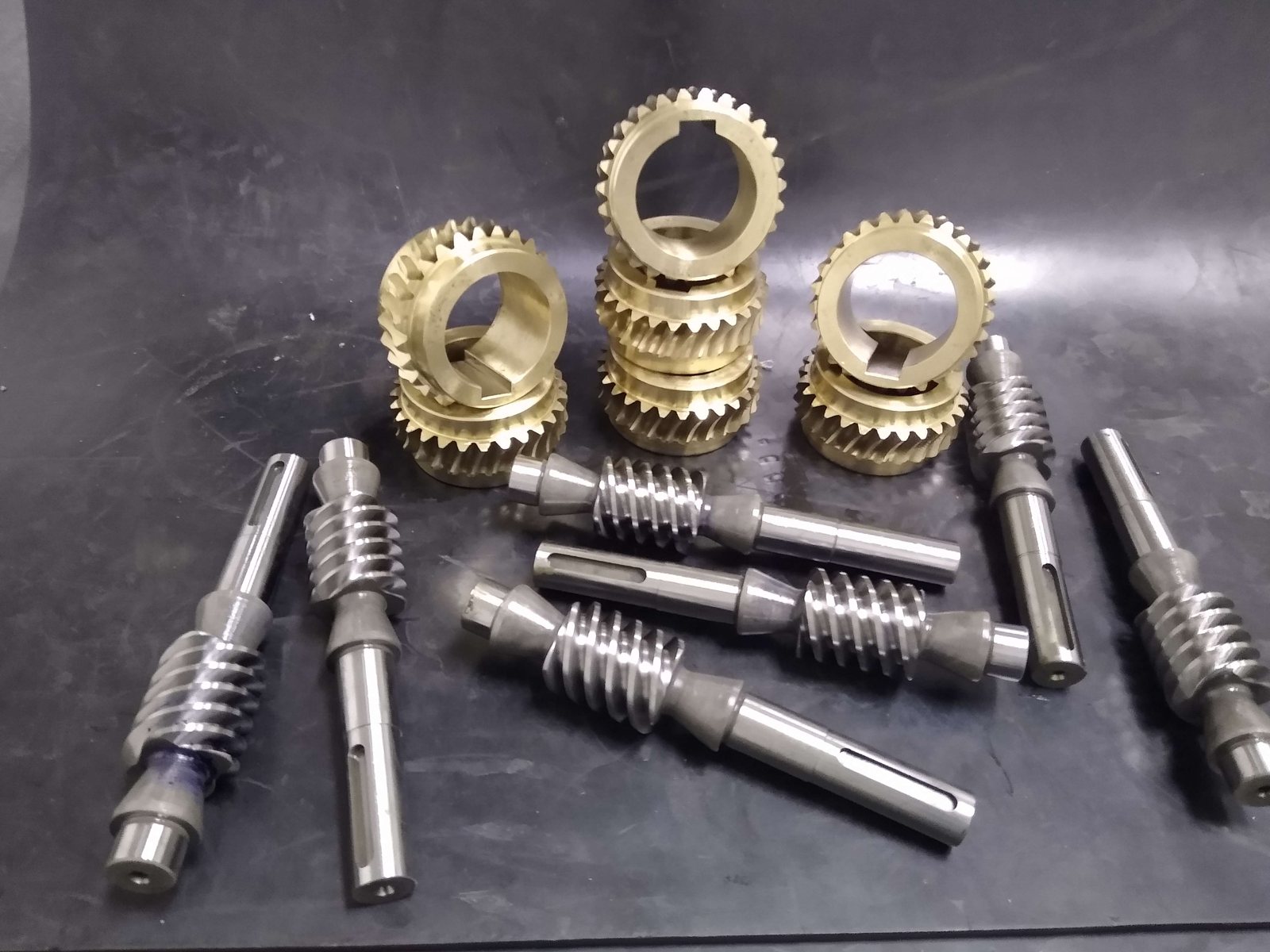
Definition
Module (m) is the ratio of pitch diameter (dp) to the number of teeth (z), expressed in millimetres: m = dp / z.
It indicates tooth size. A larger module means larger teeth and generally greater load capacity; a smaller module means finer teeth and smoother meshing.
Two gears can only mesh if they have the same module and pressure angle. Their tooth counts determine the transmission ratio.
Metric module and diametral pitch
Metric module is the usual standard in Brazilian and European drawings. Components of North American origin commonly use diametral pitch (DP), expressed in teeth per inch. Both describe the same characteristic in different systems, with the approximate conversion m = 25.4 / DP.
Older imported machinery often combines both systems within the same equipment. Identifying the correct system prevents manufacturing a component that will not mesh with the existing mating gear.
How to estimate module without a drawing
The outside diameter (De) and tooth count (z) of an unmodified cylindrical spur gear provide a starting point. The approximation De = m × (z + 2) gives m ≈ De / (z + 2).
The result is usually close to a standard module value. Confirmation requires additional measurements of face width, tooth thickness and height, and verification against the mating gear. Worn, profile-shifted or broken teeth affect measurements and require careful examination.
Why we request this information for a quotation
Module, tooth count and pressure angle determine the tooling and milling process. Without these details, any estimate of lead time or cost is uncertain.
If you do not have this information, photographs and available measurements can support preliminary evaluation. When no drawing remains, determining geometry from the physical sample is part of our work. Manufacturing requires a technical drawing or physical sample.