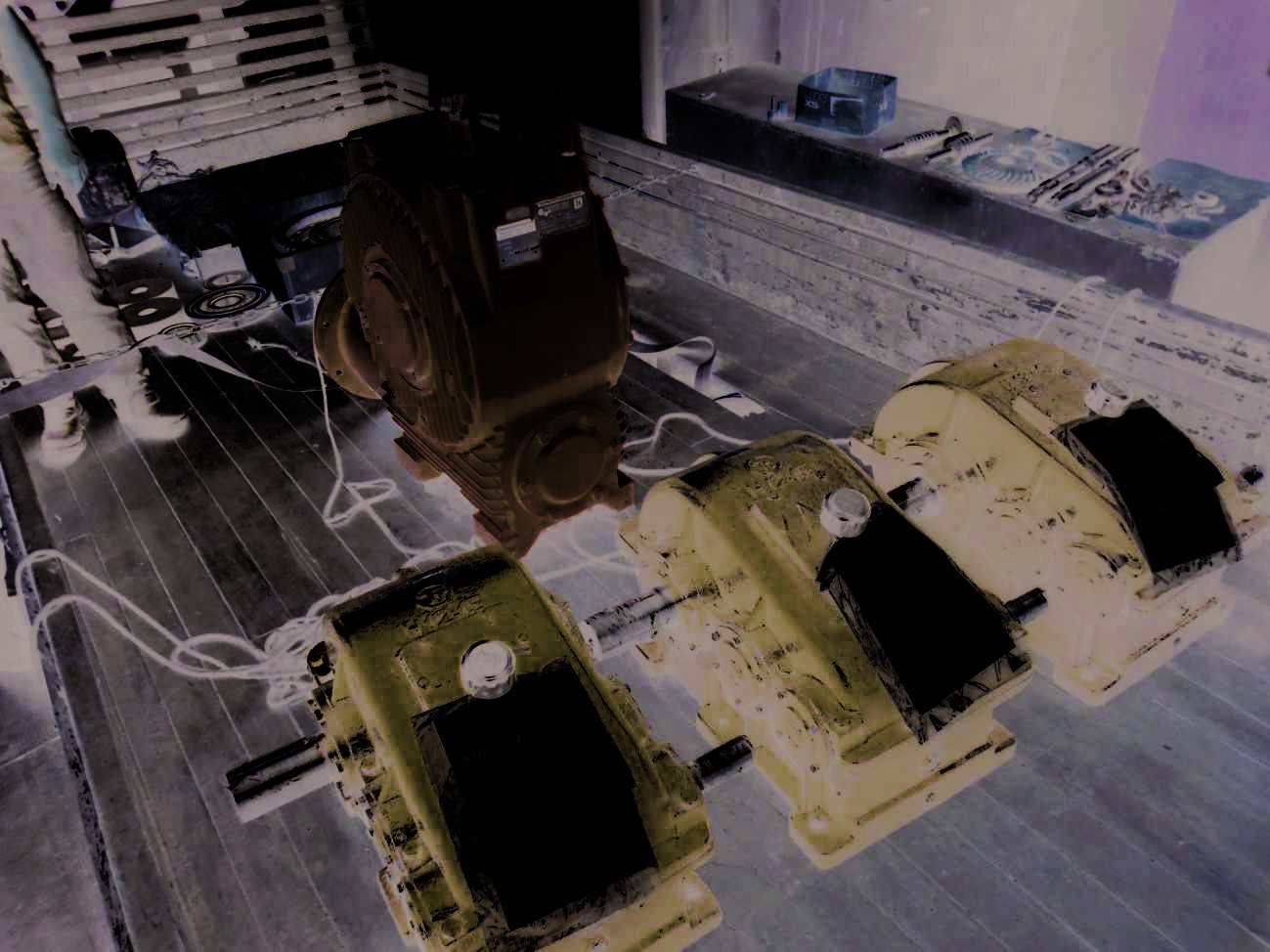
Signs that a gearbox needs assessment
- Abnormal noise, periodic knocking or a whine that changes with load
- Vibration above the equipment’s historical baseline
- Temperature outside the usual operating range
- Oil leaks through shaft seals, gaskets or covers
- Excessive backlash between input and output
- Metal particles in the oil
- Visibly damaged teeth observed through an inspection opening
What disassembly reveals
Assessment with the gearbox open separates effective reconditioning from repeated part replacement. We check gears, pinions, wheels, shafts, worms, bushings and bearing seats, as well as tooth contact patterns.
The aim is to identify lubrication failure, overload, misalignment, incorrect component geometry or natural wear after years of operation. Without this, the same fault returns.
How we carry out reconditioning
- Receipt under Brazil’s remittance-for-industrial-processing procedure
- Disassembly and component inspection
- Identification of the causes of the problem
- Measurement and dimensional assessment
- Reconditioning or manufacture of necessary components
- Reassembly
- Dimensional verification before release and issuance of the return tax invoice
Components we manufacture for gearboxes
Gears and pinions, bronze worm wheels, worm shafts, shafts, bushings and special components are manufactured from a drawing or the original physical component, including parts for older, imported or discontinued gearboxes.
The equipment often remains suitable for the process, but its specific replacement component is no longer available on the market.
Overhaul or replace the gearbox?
Large gearboxes with sound housings and stable applications are often worth reconditioning, particularly when the lead time for new equipment is incompatible with the shutdown schedule.
Replacement tends to make sense when the housing is compromised, equipment is undersized for current loading, or combined component costs approach the price of an equivalent gearbox.